A washing machine problem usually starts small, a strange noise, water not draining properly, or clothes coming out wetter than usual. In Sharjah apartments, where machines are used frequently and space is limited, these issues escalate fast if ignored.
This guide walks you through the most common washing machine faults, what you can safely check yourself, and when calling a professional is the smarter decision.
Before You Start: 5-Minute Safety & Basic Checks
Before assuming your washing machine is seriously damaged, take a few minutes to rule out basic issues. Many common problems are solved at this stage without tools or technical skills.

Do these checks first:
- Switch off the washing machine and unplug it
- Turn off the water supply valves
- Ensure the door or lid is fully closed and locked
- Restart or reset the machine
- Confirm the correct wash program is selected
- Place towels or a shallow tray under the machine before opening filters
Top 10 Common Washing Machine Faults and How to Fix Them
The following problems are the most frequently reported by households across Sharjah. Each fault starts with what it means, followed by symptoms and safe actions you can take.
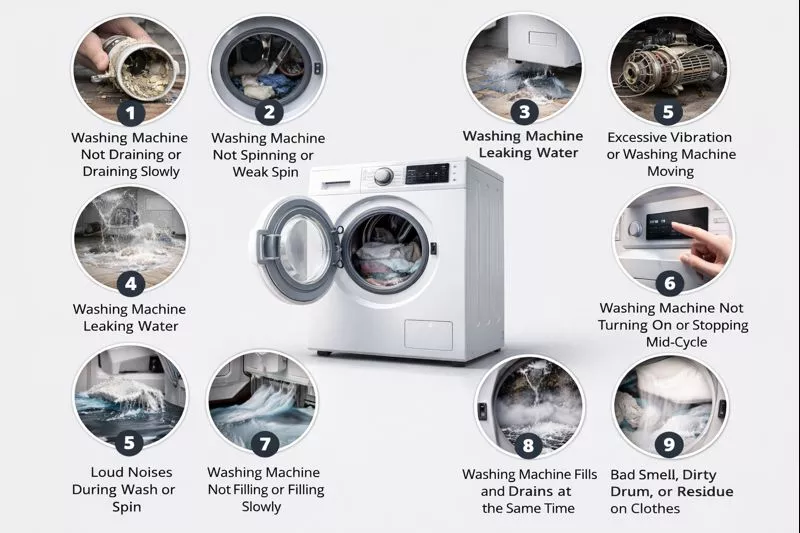
1. Washing Machine Not Draining or Draining Slowly:
Drainage problems are among the most common washing machine complaints and often stop the cycle completely.
Symptoms:
- Water remaining in the drum after washing
- Door not opening
- Cycle stopping midway
Common causes:
- Blocked drain pump filter
- Kinked or clogged drain hose
- Failing drain pump
What you can safely try?
Cleaning the drain filter is usually the first and most effective step, as debris like coins and lint collect here. Check the drain hose for bends or blockages behind the machine. If water still doesn’t drain properly, the drain pump may need professional replacement.
2. Washing Machine Not Spinning or Weak Spin:
A washing machine that doesn’t spin properly leaves clothes heavy and soaking wet.
Symptoms:
- Clothes dripping with water
- Spin cycle skipping or stopping early
Common causes:
- Drainage issues
- Unbalanced or overloaded drum
- Door or lid lock malfunction
What you can safely try?
Redistribute the laundry evenly and reduce the load size. Run a spin-only cycle to check if the issue repeats. If spinning still fails, the problem is often linked to drainage or a faulty locking mechanism.
3. Washing Machine Leaking Water:
Leaks can range from minor drips to serious flooding if ignored.
Symptoms:
- Water pooling on the floor
- Damp smell near the machine
Likely causes:
- Loose inlet or drain hoses
- Damaged door gasket
- Excess detergent causing oversudsing
Checking and tightening hose connections often resolves minor leaks. Cleaning the door seal and correcting detergent use also helps. Persistent leaks usually indicate internal hose or valve issues.
4. Excessive Vibration or Washing Machine Moving:
Strong vibration is especially common in apartment buildings with uneven flooring.
Symptoms:
- Loud banging during spin
- Machine shifting from its position
Causes:
- Machine not level
- Overloading
- Transport bolts still installed
Leveling the machine and reducing load size can make a noticeable difference. Continuous vibration may damage internal suspension parts and should not be ignored.
5. Loud Noises During Wash or Spin:
Some sounds are normal, but others signal serious mechanical problems.
Symptoms:
- Grinding or roaring noises
- Metal clanking during spin
Light clicking or motor sounds are normal during operation. Loud grinding or roaring often points to bearing or drum damage. Continuing to use the machine in this condition usually leads to more expensive repairs.
If you are unsure whether a fault is worth repairing or if replacement makes more sense, this detailed guide explains how to decide based on machine age, fault type, and repair cost.
6. Washing Machine Not Turning On or Stopping Mid-Cycle:
Power-related issues can appear sudden and confusing.
Symptoms:
- No display or response
- Machine stopping unexpectedly
Common causes:
- Power supply interruption
- Faulty door lock
- Error code activation
Resetting the machine and checking the power outlet may help. If the issue repeats, internal electrical components should be checked by a technician.
If you’re concerned about repair expenses, this cost guide explains current washing machine repair prices in Sharjah based on fault type and parts
7. Washing Machine Not Filling or Filling Slowly:
Water intake issues often look serious but are sometimes simple to fix.
Symptoms:
- Drum not filling with water
- Very long fill time
Causes:
- Closed or partially closed water valve
- Blocked inlet hose filter
Cleaning the inlet filter and ensuring the valve is fully open often restores normal water flow. If filling remains slow, the inlet valve may be faulty.
8. Washing Machine Fills and Drains at the Same Time:
This problem is common in Sharjah apartments and often mistaken for a serious fault.
Symptoms:
- Water never stays inside the drum
- Wash cycle never progresses
- Clothes remain dry
Main cause:
- Drain hose positioned too low, causing siphoning
Correcting the drain hose height and allowing an air gap usually solves the problem immediately. This is an installation issue, not a machine failure.
9. Bad Smell, Dirty Drum, or Residue on Clothes:
Hygiene problems usually develop gradually due to usage habits.
Symptoms:
- Musty smell
- Black residue inside the drum
Causes:
- Excess detergent buildup
- Frequent cold washes
Running regular drum-clean cycles and using the correct detergent amount helps prevent odor and buildup.
10. Too Much Foam or Oversudsing:
Excess foam interferes with rinsing, draining, and spinning.
Symptoms:
- Thick foam during washing
- Poor rinse results
Why it happens:
- Overuse of detergent
- Wrong detergent type
Running an extra rinse cycle helps reduce foam. Adjusting detergent quantity prevents the issue from returning.
Emergency Washing Machine Problems in Sharjah:
The following issues should never be ignored, especially in apartment buildings where water or electrical faults can affect other units.
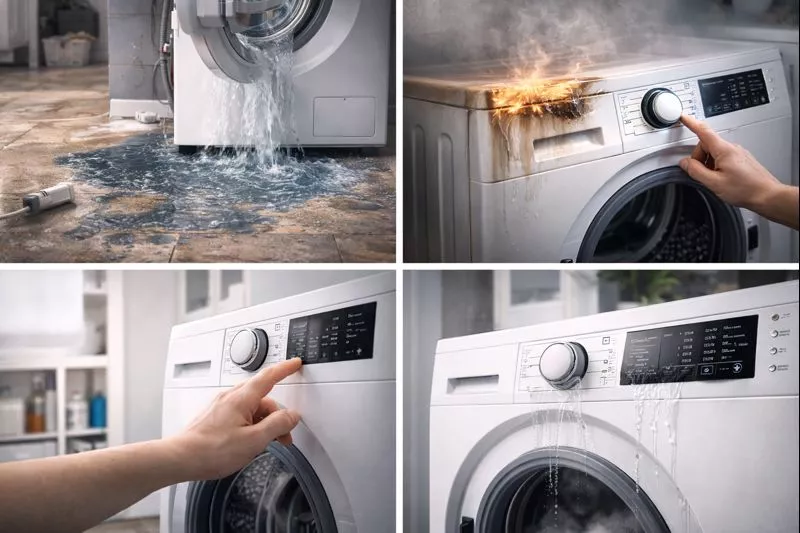
Water Leaking Heavily onto the Floor:
Heavy water leakage usually indicates a burst hose, internal valve failure, or loose internal connection. Continuing to run the washing machine can quickly flood the area and damage flooring. The machine should be switched off immediately, and the water supply should be shut to prevent further leakage.
Electrical Burning Smell from the Washing Machine:
A burning smell is a strong sign of electrical overheating or wiring failure inside the machine. This is a serious safety risk and should never be tested by running another cycle. Turn off the power immediately and avoid using the machine until it has been inspected by a technician.
Repeated Power Trips When the Machine Is Running:
If the washing machine keeps tripping the circuit breaker, it usually means there is an internal electrical fault. This could involve the motor, heating element, or control board. Repeatedly resetting the breaker can worsen the damage and should be avoided.
Water Seeping from the Control Panel Area:
Water leaking from the control panel area indicates an internal hose or dispenser failure near electrical components. This type of leak can cause sudden machine failure or short circuits. The washing machine should be turned off and not used again until professionally checked.
When NOT to DIY – Call a Washing Machine Technician:
Electrical faults, bearing failures, and internal leaks are not safe to handle without proper tools or experience. If the washing machine repeatedly trips the power, gives off a burning smell, makes loud bearing noises, or leaks from inside the control panel, continuing DIY attempts can quickly make the damage worse. In these cases, stopping the machine and getting it checked by a professional is the safest decision.
For Sharjah residents, it often makes sense to contact a local repair team that deals with these faults daily. Washer Repair Sharjah has been handling washing machine issues across Sharjah for years, offering same-day inspections, genuine replacement parts, and repair warranties for peace of mind.
If the problem feels beyond basic checks, reaching out to a technician through info.washerrepairsharjah@gmail.com is a practical next step before the fault turns into a full breakdown.
Preventive Maintenance Tips to Avoid Future Breakdowns:
Simple habits can significantly extend your washing machine’s lifespan.
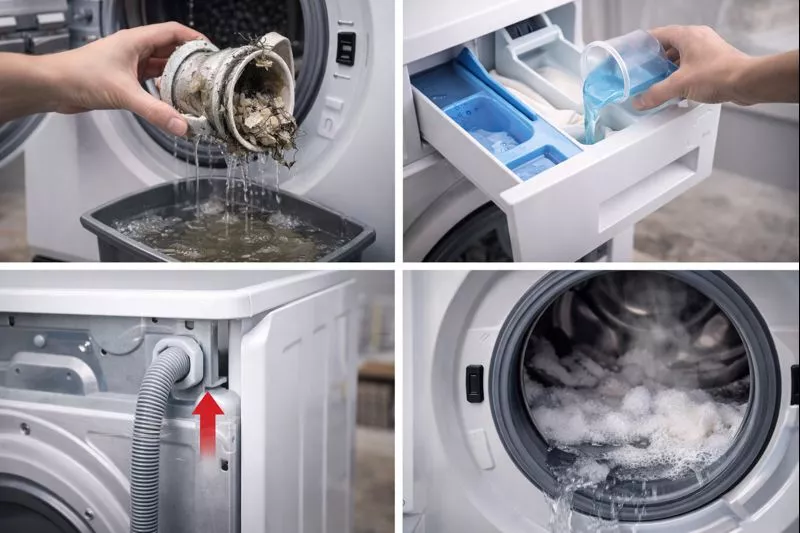
Maintenance checklist:
- Clean the drain pump filter once a month
- Use the correct detergent type and measured quantity
- Avoid overloading the drum
- Keep the drain hose at the proper height
- Run a drum-clean cycle regularly
Conclusion:
Most washing machine faults don’t happen overnight. They develop gradually and give warning signs that are easy to miss. Addressing small issues early, knowing what’s safe to check, and calling a technician at the right time can prevent costly repairs and unnecessary stress.
FAQs
The most common issue with top loaders is failure to spin properly. This is usually caused by unbalanced loads, worn suspension parts, or lid switch problems.
Frequently failing parts include the drain pump, door or lid lock, inlet valve, bearings, and control board. Wear and tear, overloading, and improper detergent use accelerate failure.
Poor drainage, unbalanced loads, and faulty door locks are the most common causes. If the machine cannot drain water, it will not spin for safety reasons.
Drainage issues are the most common fault overall. Blocked filters and hoses account for a large number of service calls.
Start by observing symptoms such as noise, leaks, or incomplete cycles and also perform basic safety checks.

Esha is a trusted Washer Repair Specialist in Sharjah, UAE, with over 10 years of hands-on experience in washing machine repair, troubleshooting, and maintenance. She specializes in repairing front-load, top-load, fully automatic, and semi-automatic washing machines for residential and commercial customers.
Esha has extensive experience working with leading washing machine brands, including LG, Samsung, Haier, Dawlance, Bosch, Whirlpool, and Siemens. Her expertise covers common and advanced washer issues such as drainage problems, spin failure, noise issues, error codes, water leakage, and motor faults.
All blog posts and repair guides written by Esha are based on real-world repair experience, technical knowledge, and industry best practices. Her content is designed to help customers in Sharjah and nearby areas understand washer problems, preventive maintenance, and when to seek professional washer repair services.
Esha is committed to providing reliable, affordable, and professional washer repair solutions in Sharjah, focusing on long-term performance, safety, and customer satisfaction. Her goal is to educate users through accurate repair blogs while delivering trusted local appliance repair services.


